Catholics Against Catholicism: Optimizing Integral Human Development -- Understanding the Social Mission of the Catholic Church, Part 9.
Part 9 of a ten-part series on the social mission of the Catholic Church

Part 9: Catholics Against Catholicism
This is Part 9 of Optimizing Integral Human Development, a ten-part series on the social mission of the Catholic Church. This installment names the clerics, the Catholic political activists, and the self-proclaimed Catholic institutions whose public political positions contradict the Church’s social teaching rooted in the optimization of integral human development, and argues that where their politics and the Church’s social teaching on human development collide, their political positions must yield.
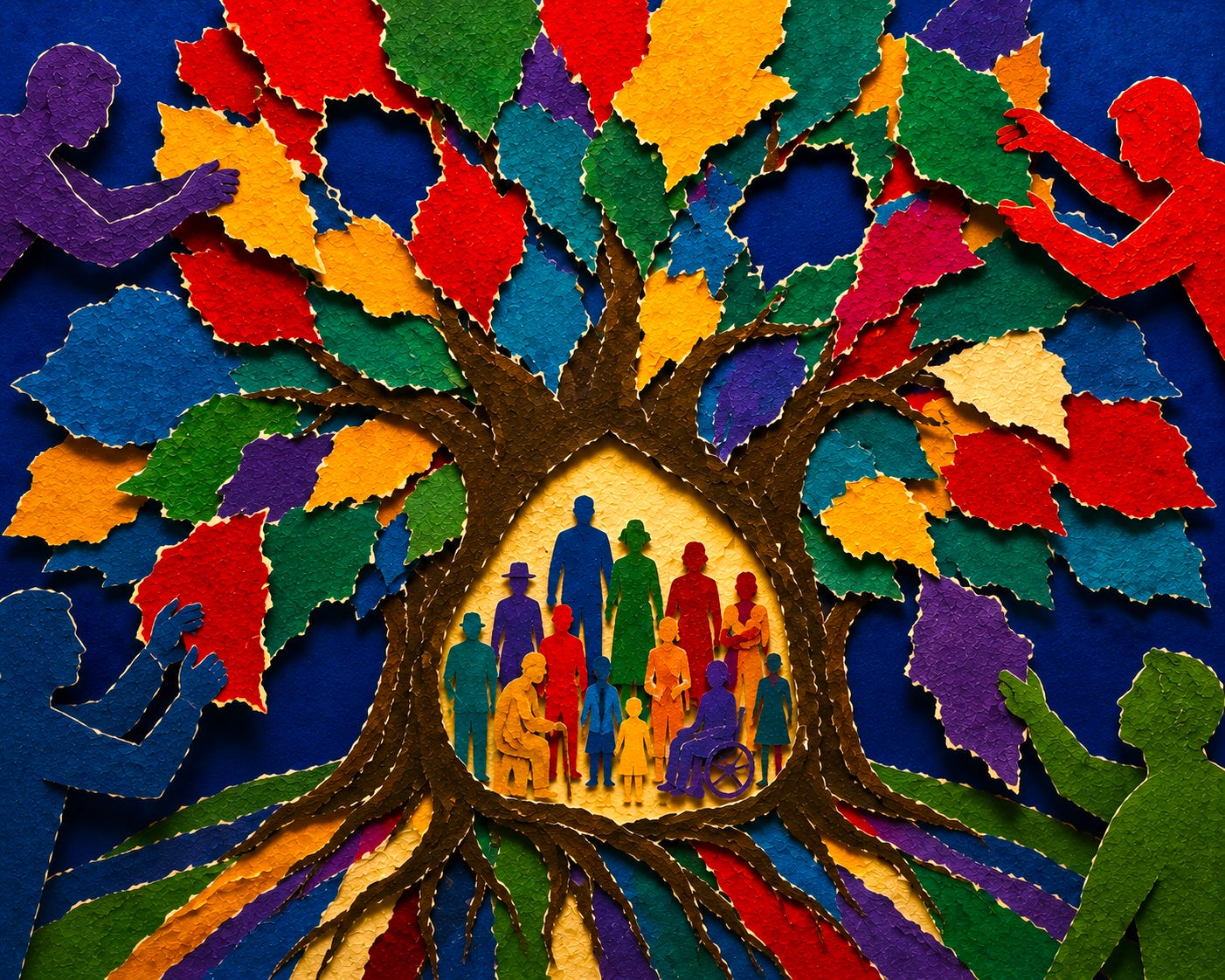
The previous chapters established that the Catholic Church regards integral human development as the binding standard of the Church’s social mission, affirmed across six pontificates, embedded in the Vatican’s institutions, rooted in twenty-four centuries of thought. A harder observation now follows. A number of prominent Catholics and self-proclaimed Catholic organizations and institutions publicly advocate political positions that contradict this teaching, often while presenting themselves as the defenders of Catholic tradition and doctrinal orthodoxy. This section names them.
True Catholic Orthodoxy Has a Visible Center.
True Catholic orthodoxy in the social realm has a clear and documented center: the body of magisterial teaching on optimizing integral human development traced across this series. The Church’s magisterial teaching binds all people, organizations, and institutions that profess to be Catholic. Catholics who affirm the Church’s settled positions on the dignity of every human person, the universal destination of goods, the preferential option for the poor, the common good, subsidiarity, solidarity, and the full scope of human development -- and whose embrace of these principles determines the particulars of their political positions -- stand within that orthodox Catholic center. Catholics who reject significant parts of the Church’s social teaching, or who consistently defend positions that the Church’s social encyclicals condemn, stand outside it -- however firmly they may hold other Catholic doctrines.
Four Patterns of American “Catholic” Opposition to the Church’s Social Teaching.
Four patterns of “Catholic” opposition to the Church’s social teaching have emerged in American Catholic discourse. The first pattern of opposition focuses on defending the Trump administration’s view of migrants as threats to be excluded rather than persons to be received. Vice President JD Vance, a Catholic convert, supplied the supposedly Catholic theological rationale for defending the Trump administration’s program of mass deportation in early 2025, invoking the medieval Catholic principle of ordo amoris -- the order of love -- to argue that a Christian’s obligations run first to family and fellow citizens and only last -- if ever -- to the stranger.
Vance pressed this theological case against the Pope and the U.S. Catholic Bishops directly, suggesting their refugee work served their federal funding more than the migrant. Pope Francis answered him in a February 2025 letter to the United States bishops. The true order of love, he wrote, is the love of the Good Samaritan, “a fraternity open to all, without exception,” and Christian charity does not ration itself outward in circles that reach the stranger last.
Pope Francis’s authoritative rejection of Vance’s alleged Catholic argument for nationalism applies with equal force against the oxymoronically named group Catholics for Catholics, which blamed the Archdiocese of Los Angeles and Catholic Charities for the 2025 unrest over immigration raids and accused the U.S. Catholic Bishops of importing migrants for grant money. While holding itself out as a Catholic organization, Catholics for Catholics is a partisan political operation dedicated to political objectives that are counter to and oppose the teachings of the Catholic Church, led by Republican political operative and nationalist activist John Yep, Trump Svengali Steve Bannon, and Trump-pardoned former general Michael Flynn.
The second pattern of American “Catholic” opposition to the Church’s social teaching focuses on defending the free market as a self-justifying moral order. Its most developed organizational form is the Acton Institute, founded in 1990 by Father Robert Sirico, which for three decades has attempted to shoehorn the free-market capitalist economics and political individualism of Ludwig von Mises and Friedrich Hayek into the Catholic tradition by presenting the unregulated market as the surest route to the common good. The Acton Institute purports to ground its free-market interpretation of Catholicism in St. John Paul II’s qualified praise of the free economy in Centesimus Annus, a 1991 encyclical written following the collapse of Soviet communism. While the encyclical is the Catholic Church’s most explicit embrace of market economics, Centesimus Annus also fiercely warns that an unregulated market leads to an “idolatry of the market” that reduces the human person to a mere commodity, strips economic life of its moral purpose, and neglects the universal destination of goods by leaving the vulnerable to be crushed by the forces of unbridled consumerism. The Acton Institute has responded to this criticism of its free-market ideology by shifting the blame for its consequences to the collapse of moral and religious institutions (like the Church) rather than free-market capitalism itself. In other words, it has inverted Catholic social teaching by blaming the Church rather than the free market -- and the free market’s powerful beneficiaries -- for the harm caused by what Pope Francis described in his 2013 apostolic exhortation Evangelii Gaudium as an economy that kills. Francis’s question -- “How can it be that it is not a news item when an elderly homeless person dies of exposure, but it is news when the stock market loses two points?” -- remains the truly orthodox Catholic response to the contorted free-market Catholicism of the Acton Institute.
The Napa Institute, founded by the multi-millionaire hotelier and anti-regulation activist Timothy Busch, has advanced the same mixture of libertarian economics and supposed Catholicism, creating a donor network of politically conservative Catholic billionaires and a speakers network of Catholic intellectuals allied with the Republican Party and the Trump administration, and then wrapping all of it in the wine-tasting-with-bishops lures of high-priced conferences.
But despite the Napa Institute’s carefully cultivated aura of intellectual and clerical prestige, Catholic social teaching stands firmly against the positions that it claims to be the outcomes of rigorous Catholic thinking. Leo XIII denied that the market is a self-justifying moral order, Benedict XVI tied the economy’s legitimacy to its service of integral human development, and John Paul II condemned unbridled capitalism in the same breath as atheistic communism. Pope Francis and now Pope Leo XIV have made it their mission to make the official Catholic rejection of their political views even clearer and sharper.
The third pattern of American “Catholic” opposition to the Church’s social teaching focuses on the use of the power of the state to enforce Catholic doctrine. Harvard law professor Adrian Vermeule, a Catholic convert, has built the fullest contemporary version of this call for Catholic integralism. His position, which he calls common-good constitutionalism, would use the power and authority of the state to align civil law with the spiritual common good, imposing by force what he believes is natural law and a Catholic moral order.
While the Church wholeheartedly supports the concept of the “common good,” it explicitly rejects state coercion as a means of achieving it. Through the landmark Vatican II decree Dignitatis Humanae, the Church permanently affirmed that freedom of conscience is a fundamental human right rooted in personal dignity. Catholic social teaching emphasizes that genuine faith must be chosen freely, rather than handed down through the coercive apparatus of a centralized state. By separating the civic duty of promoting the common good from the enforcement of theological dogma, the Church actively distances itself from authoritarian integralist governance.
Integralists like Vermeule claim to speak as Catholics, but their views are clearer in opposition to the official teaching of the Catholic Church. Pope Francis, in his encyclical Fratelli Tutti (2020), brought this position up to date by reaffirming a “healthy secularity” for global politics, explicitly warning against theocratic temptations while insisting that the state must cooperate with religious bodies -- not be absorbed by them -- to advance integral human development and the global common good. Recently, in his April 2026 message to the Pontifical Academy of Social Sciences and his first social encyclical, Magnifica Humanitas, Pope Leo XIV has confirmed the modern magisterial opposition to integralist-style state coercion in favor of democratic collaboration and human rights.
The fourth pattern of American “Catholic” opposition to the Church’s social teaching focuses on seeing Christ as a warrior king, reinventing a supposedly Catholic ethos of male physical and military strength and aggression, and inverting Christ’s love and compassion for the weak and vulnerable as self-defeat and manipulation.
The contemporary campaign to rebrand Christ from a loving, self-emptying shepherd to a hyper-masculine, armor-clad and sword-waving warrior began in Evangelical, Christian nationalist circles far outside the official Catholic Church. Leading and influential examples of the campaign are Evangelical pastor Joe Rigney’s book The Sin of Empathy, Christian nationalist commentator Allie Beth Stuckey’s calling empathy toxic, and trillionaire Elon Musk’s verdict that empathy is “the fundamental weakness of Western civilization.” Joe Rigney and Allie Beth Stuckey are deeply connected both to the religious right and Donald Trump, serving as key cultural and theological defenders of the MAGA movement’s political base. Musk has also been a key ally of Donald Trump, as both financier and publicist, as well as an increasingly outspoken voice decrying what he sees as the decline of white civilization and the need to protect white culture.
Christ as super-masculine warrior king is also prominently on display in the tattoos and Christian nationalist ideology of Pete Hegseth, Trump’s Secretary of Defense (or War). Hegseth is a member of the Communion of Reformed Evangelical Churches (CREC), a global network of archconservative, Calvinist churches known for rejection of modern culture and opposition to religious pluralism. Hegseth applies this warrior theology directly to modern geopolitics, using Pentagon prayer services to ask the warrior-Christ for overwhelming violence and lethal precision for American troops, whom he views as divine agents fighting a holy war against the enemies of righteousness.
Promotion of a purportedly Catholic version of Hegseth’s view of Christ has been the task of Trump’s Vice President JD Vance. Vance has been attempting to give a Catholic baptism to Hegseth’s Evangelical vision of a “muscular” and warrior Christianity. Like Hegseth, Vance promotes a view of Christ that rejects traditional, passive theological depictions of Jesus in favor of a hyper-masculine, lethal warrior figure. Also like Hegseth, Vance draws heavily from historical Crusader lore to picture Christ as a fierce commander who demands unapologetic strength, cultural warfare, and literal battlefield violence rather than peaceful appeasement.
The Catholic Opponents of Catholic Social Teaching Have Patrons, Microphones, and at Least One Prominent Mitre.
These “Catholic” positions in clear and often fierce opposition to Catholic social teaching and to the speeches and encyclicals of all modern Catholic popes -- including defending or attempting to minimize the significance of Trump’s unprecedented personal attacks on Pope Leo XIV -- did not assemble themselves. Behind them stands a network of money, media, and clerical cover and complicity.
The money runs largely through Leonard Leo, the Federalist Society co-chairman who built the pipeline of conservative judicial appointments and sits on the boards of the Napa Legal Institute and the Catholic University of America. Leo funds Napa, and Napa, alongside the Eternal Word Television Network and the journal First Things, supplies the platforms where the positions above are presented as the authentic Catholic voice. First Things in particular gave postliberalism and national conservatism a purportedly Catholic intellectual home.
Bishop Robert Barron, whose Word on Fire ministry and publishing network is the most-watched Catholic media operation in the country, does his utmost to lend the status of his episcopacy and his media presence to the opponents of Catholic social teaching. While the Trump administration slanders immigrants, enforces mass deportation through military-style police operations, calls for more executions, and engages in unnecessary wars that kill and maim tens of thousands of civilians, Bishop Barron uses his power as a prominent and powerful representative of the hierarchy of the one, holy, catholic, and apostolic Church to criticize “wokeness” and attack politically weak and vulnerable minorities such as gay people and transsexuals, while saying practically nothing about the harshest, most violent, and murderous policies of the Trump administration.
Other members of the American clerical hierarchy also supply cover for the Catholic attack on Catholic social teaching. Cardinal Raymond Burke, once head of the Church’s highest court and one of the four cardinals who filed the 2016 dubia against Francis, and Bishop Joseph Strickland, removed from the Diocese of Tyler in 2023 after rejecting what he called Francis’s undermining of the faith, became rallying points for Catholics who set their resistance to the reigning magisterium against the pope himself. Strickland has appeared with Catholics for Catholics.
The Catholic Church’s social teaching has developed across more than a century. New encyclicals have extended its reach -- to creation and all of the natural environment in Laudato Si’, to fraternity across borders in Fratelli Tutti, to artificial intelligence and the dehumanization of work and social interaction in Magnifica Humanitas.
None of these self-proclaimed Catholic politicians, political operatives, organizations, or institutions -- nor any of their clerical apologists and cheerleaders -- are entitled to legitimize an alternative MAGA Catholicism as they oppose the Catholic Church’s social teaching.
______
This essay is part of a ten part series on Optimizing Integral Human Development -- Understanding the Social Mission of the Catholic Church.
The individual parts of the series are:
Part One: The Two Leos, 135 Years Apart
Part Two: Integral Human Development Is 2,400 Years Old
Part Three: Six Popes Have Taught the Same Doctrine
Part Four: The Church Reorganized Itself Around the Idea of Integral Human Development
Part Five: The Dimensions of Integral Human Development
Part Six: What Integral Human Development Rejects
Part Seven: Integral Human Development in the Age of Artificial Intelligence
Part Eight: The Attack on Empathy
Part Nine: Catholic Against Catholicism
Part Ten: What Integral Human Development Requires of Us Now
I suggest that there is a fifth pattern of "Catholic" opposition to the Church's Social Teaching, and even that it is the most pervasive and influential of them all.
It appears to me - please correct me if I am wrong - that few bishops and even fewer priests make any effort to read, assimilate, understand, preach, teach and live Catholic Social Teaching. In many or most Dioceses, and many or most parishes, it is never mentioned, taught or preached. Look at the web sites of many parishes, and you will read nothing about Catholic Social Teaching.
This is troubling because most Catholics, I believe, receive their formation from what is presented (or not) in their own parishes. They may not have the knowledge, curiosity or resources to look elsewhere. So to a large extent the bishops and priests are the gatekeepers of Catholic Social Teaching, and Catholic Teaching more generally, and they largely keep those gates closed.
No wonder Catholic Social Teaching is regarded as "The Church's Best Kept Secret"!
These clergy are I believe some mixture of poorly formed, ignorant, indifferent, uncaring and frightened. Many have no conception that Catholic Social Teaching is an essential aspect of the faith, but completely ignore it, and limit their ministries to sacraments and piety.
Karl Rahner wrote an essay in 1963, called "Heresy in the Church" from his book, "Nature and Grace", which I find illuminating on this issue. In that essay he said,
"There is still heresy in the Church today, not openly, but hidden as a sort of cryptogram."
"We are talking about every error which is contradictory to God’s revelation, every distorted notion and false interpretation of the faith, which stems from an unchristian mental attitude. Someone who does not reckon with truth in everyday affairs is a heretic. This is not explicitly formulated but it is a way of behaving, a general attitude."
And most tellingly,
"The Church can do little against mute heresy, which only speaks in correct statements and keeps silent on those which do not suit it."
This, I believe, is as deep a problem as any in the neglect of and resistance to Catholic Social Teaching.
Thank you very much for this important information! I’ve been enjoying this series from the beginning! Looking forward to Part 10!